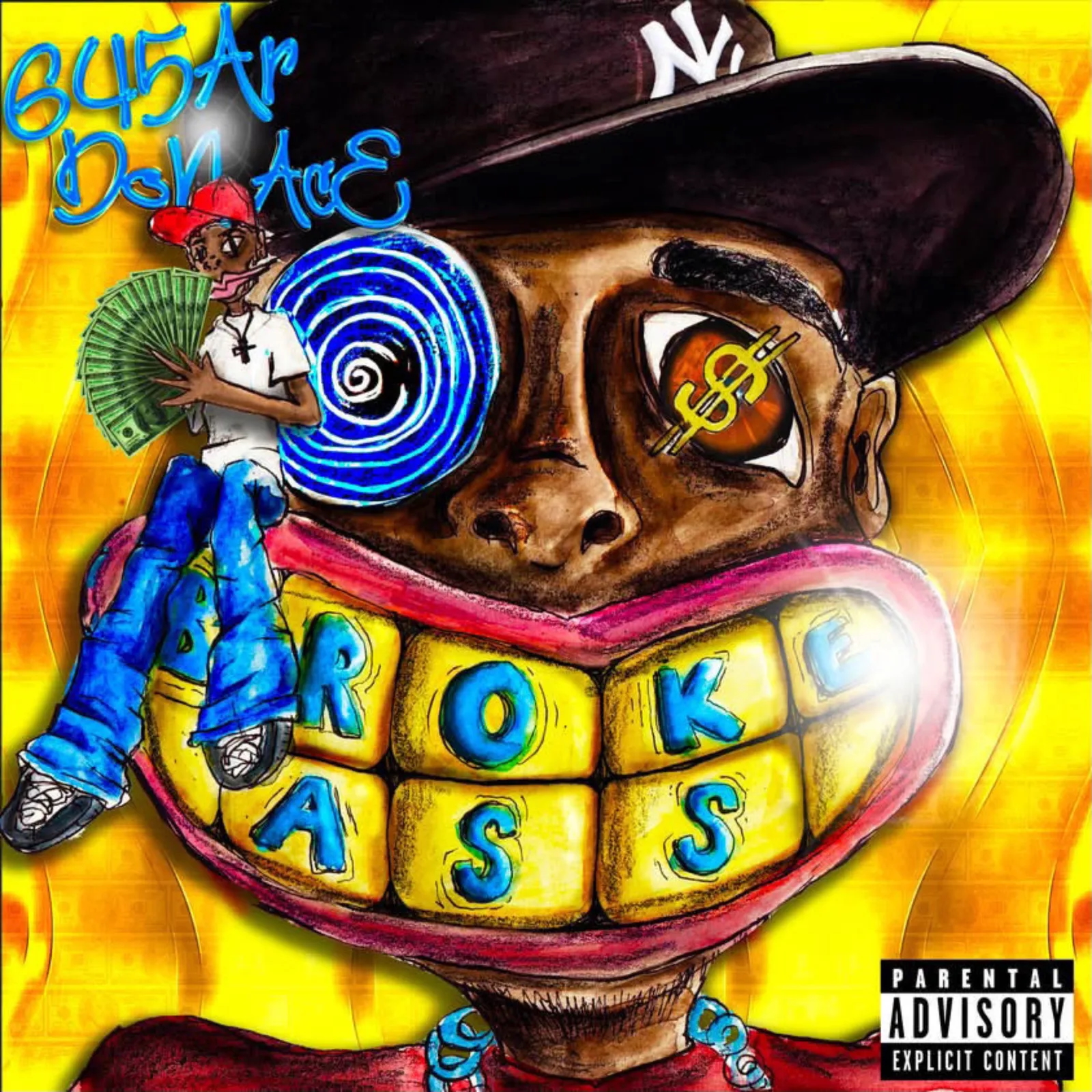
645AR - Broke A$$ (Single Review)
September 14th, 2026

September 14th, 2026
It is Wednesday, September 2nd, 9:30 PM. I am sitting outside at Caffe Reggio waiting for a decaf double espresso, listening to “Broke A$$” on repeat, and hand-writing this review on my Kindle Scribe, which I bought secondhand some months ago. I thought sitting at this cafe might bring back a feeling I haven't had since I left Paris a couple of weeks ago.
645 AR became famous back in 2020 for his Song “4 da Trap” where he rapped in a squeaky little voice that people liked to laugh at. I always enjoyed it and thought his songs were mesmerizing and catchy.
6 years later, it seems he's no longer squeaky, but his hooks still come across as mesmerizing and catchy taunts. I'm enjoying this song even on the 10th repeat.
It’s been a long day. 8 hours of work in the office, a long meandering walk, three games of Chess against a bot (two wins, one loss), a strange new horror movie about Gen-Z existential dread, awkwardly bumping into an old friend, some dramatic and despairing professional setbacks calling into question my very worth… and yet 645 has a clearly articulated answer to the rat race, to the competition, to the struggle: Who is anyone else to talk? What do they have to show for their authority over me? I am greater than all of you. I can take 645 AR's words, his cadence, his un-squeaky voice, his intimidating affect, his empowerment, and turn it right back around on my numerous enemies. I can rise up much like 645 and be the man, the successful business professional, the wanderer, the record label executive that I was born to be.
I've moved on from" Broke A$$" and am now listening to the Thelonious Monk Septet's "Monk's Music" for the first time ever. It was recommended to me on Spotify, probably due to my recent Jazz listening. (Note: 645AR was also recommended to me by Spotify).
In reveling in my arts professional disappointment, today I need an email from a music colleague that said "Spotify is getting more and more evil. "
This album's opening track "Abide With Me" is a sort of overture fanfare which sets the now nicely, but I am much too far removed from its context to even remotely understand what the context or intended reception for the track was. (Later, upon typing up and editing this text, I’ve learned that “Abide By Me” is a 19th century hymn which would have been familiar to many of this album’s Christian listeners.)
This espresso is awful.
This album was released 69 Years ago in November 1957, some two months after my mother was born. Track 2 is called “Well You Needn't" which is a perfect song title. The internet tells me it’s a popular composition by Monk that he revisited time and again over his recording and performing career.
I am in love with this music. In a world with this music everything is okay. I am free and at peace listening to this music, and though I am lacking vocabulary to describe it adequately, I don’t really need words, the music just makes me feel great. Who is anyone to say anything to Monk? To Coltrane? To Hawkins? To me on the cloud of this perfect music? Broke ass losers everywhere... to know this music must be the purest freedom.
Those Gen-Z kids lost in the eternal forest of the existential despair movie would have been fine if they simply had this record.
Meanwhile, I continue to worry that I was accidentally given caffeinated espresso which would be a catastrophe for my night of sleep, but my eyelids feel heavy two thirds of the way through my larger-than-it-should-be, disgusting "double espresso" so I think I'm fine. It tastes awful, but it's my ticket to sit in a shed on Macdougal Street at a table listening to and struggling to think about Trap & Jazz.
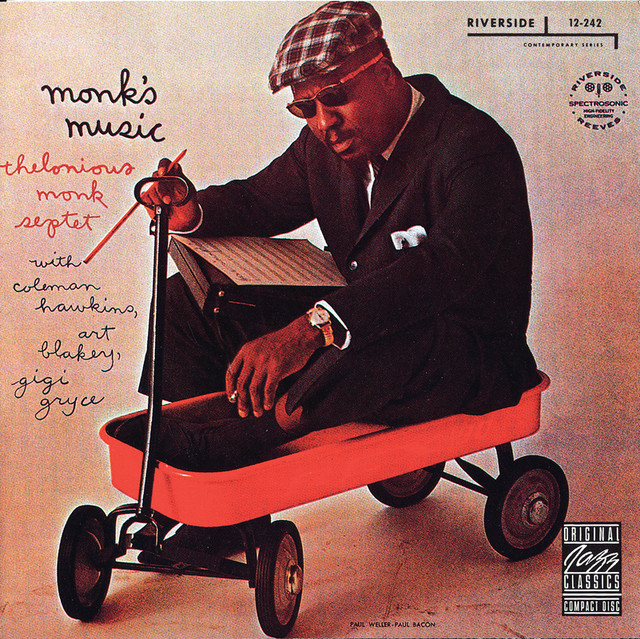
On the cover of "Monk's Music" Monk is dressed very nicely, sitting half-in-half-out of a little red children's wagon wearing Sunglasses holding a long red pencil with a sheet of music he's written on his lap. An odd look, but your broke ass can't say anything about it.
Whatever.
It’s much too hard to convey meaning as I desire to and intend to, here or anywhere else. Too much happens in a day and there’s too little time to collect it. That said, I have learned a thing or two from this swaggy, absurd album cover, this sublime perfect music, the squeaky and un-squeakly trap taunts, the awful espresso and lovely night at the cafe, the accumulation of professional failures, accumulation of professional successes, time spent alone in the big city and the endless wandering. The world is much too complex to be understood, and to truly live in it is to not understand it. But much like 645AR taunting his broke ass enemy and flaunting his wealth and success, passing the days flipping through his enormous wads of cash, so can I rest assured that in transcendent moment of listening to Thelonious Monk or 645AR for that matter, I am free, immune and beyond the judgement other earthly beings, you can’t tell me shit.
August 2nd, 2026
This album was clockwise
July 20th, 2026
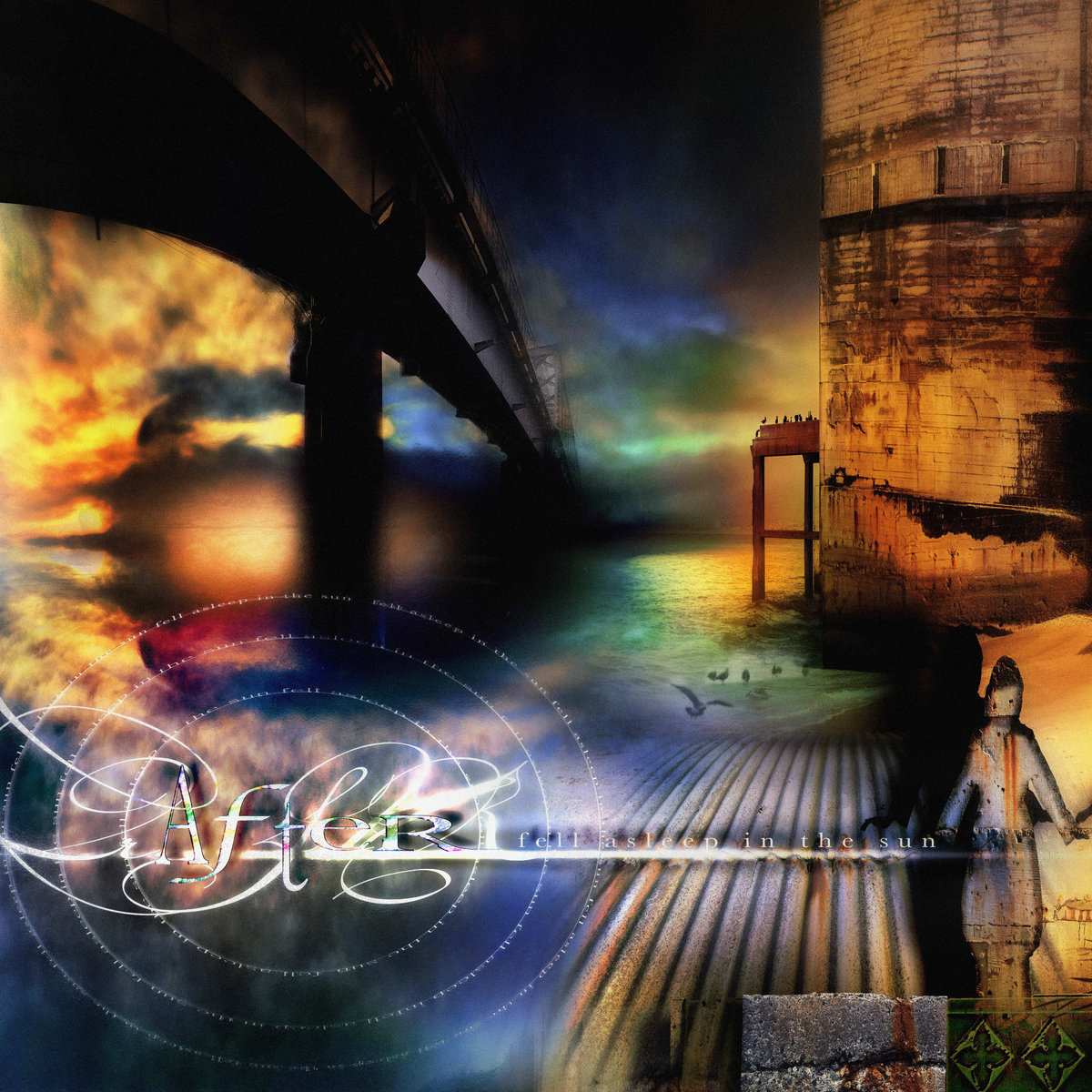
This review is almost not worth my time. Y2K-styled After's banal onslaught of contrived pop music drivel is alive with their newest single "Take Me To Sunrise" from their upcoming full-length Fell Asleep in the Sun. Listening to this song is an auditory glimpse into a mind bereft of imagination. It makes one feel as if they are trapped in a purgatory that also happens to be a Walgreens. This is the kind of music project that prompts the question: who is supporting this?
The song debuts with a reverse piano sample which summons an underwhelming downtempo beat drop. The sample treatment of the piano is not unappealing, though it is missing an ingredient of creativity that could salvage it from being a mere lazy attempt at making an “ethereal” sound. As the track proceeds, the soulless vocals cannot save the polished aesthetic of the track’s productions– and neither can the vapid lyrics which fail to compel us to believe the singer’s voice. The lyrics lack a depth of character, awarding the high-studio-budget production with a kind of mundane anxiety. Is this all humanity can express in our contemporary world?
And the voice does not fall flat because of the group’s use of autotune. Its one-dimensionality is solely riding on the group’s passionless writing and performance. It would not be an error to accuse the group of sounding like an AI prompted with making a track in the vein of “Duvet” by bôa. Judging by this single alone– ignoring the somehow more sinisterly derivative and inept sister single for the album, “Promise (When You Go)”– this album will almost certainly be a maelstrom of mediocrity.
It would seem as if After is uniquely fueled by bad faith. I hope the faulty nostalgia which drives this music has only a meager following. The good thing about this project is that there are other bands who do not make this music. Next.
July 16th, 2026
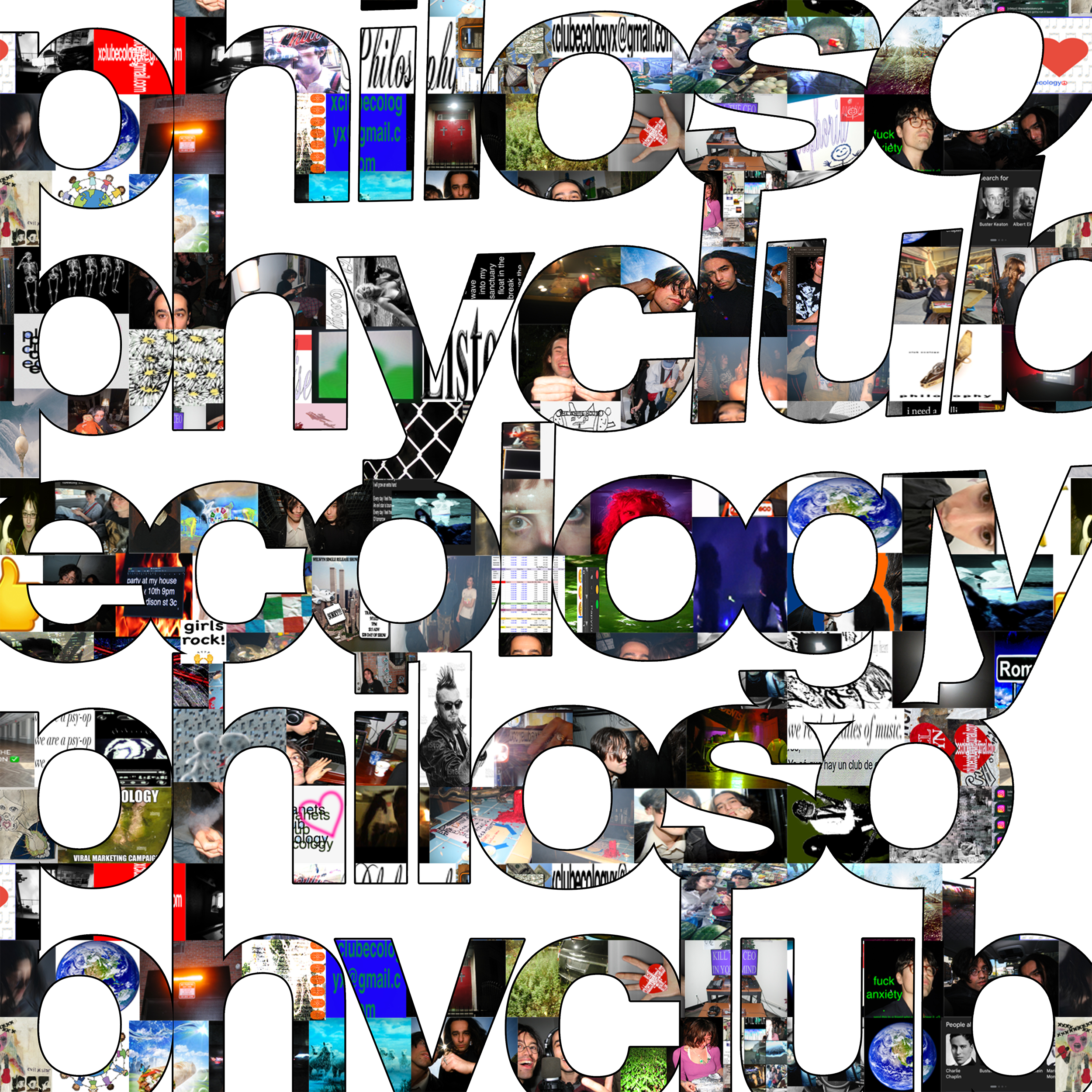
The recent wave of hermetic-while-ostentatious Gen Z electronica is unavoidable: groups like ear, bassvictim, blahblahblah, and Don't Worry all share an aesthetic of homegrown studio craft entering the post-PC club scene. These artists have an affinity for folky textures that just as easily surprise via gross juxtaposition as they do evoke an air of indie-nostalgia; idiosyncratic myth-making as a form of social media bricolage-cum-advertisement; and recuperating the vestiges of pop music forms in the wake of hyper-pop's gold rush of genre destruction. They also, for some strange, yet to be understood cultural-economic reason, happen to be mostly duos. Nevermind the perennial tenuity of music journalism's nominations of "the now:" with the assent of PC music's influence on the mainstream qua Charli XCX and the gang (with Sophie's coronation as certified futurist-visionary who broke the spell of rote hypnagogia secured for generations to come) alongside the manic-speculative audience hyper-inflation of Geese's catapult to classic-rock-resurrectionists (really?), where else could electronic music go? Enter Club Ecology.
The N.Y.C. duo's debut– Philosophy– deftly reconfigures the current moment of mad D.A.W. elasticity into something more than its parts: a comprehensive statement on the state of digital expression in an era of ever-growing economy which solicits a deluge of user-generated heart revelation. Even the tongue-in-cheek title, which flattens the depth it assumes, flips the conversation about "post-irony" on its head until we are left to contemplate the title's salience in a world of content. Sometimes only a fool can tell the truth…
Philosophy's obvious problem is the speed at which it warps seamlessly through styles previously thought bygone, gauche, or simply irrelevant into novel compositions which imbue the contemporary electronic landscape with a fusion of artful wonder and down-to-earth cynicism. The opener "Habitat" dawns with a pocket-suite of synthesizers over tom-toms and hi-hats before dropping into a serpentine bassline which carries the angst-inflected vocal swiftly into a one-off chorus: "you could be someone new." The gravity of the lyric is suspended in the group's harmony, which conjures a kind of dystopian Cee Lo Green quality before collapsing into a distorted synth-solo that sounds like Nirvana on Ableton. Or take the second track–"Luxury"– which smacks the sub upon first play with a devilishly simple bassline. This audacious track, which could reasonably be described as a hyper-witch-house-cyber-grunge electro-prog banger odyssey, showcases the group's songwriting-meets-production ambitions, as the song unfolds through samples of sheer desperation, resilience, and indictment of a culture that worships the aspiration for glitz and glamour to a pitch of psychosis, landing on an exuberant auto-tune choir featuring the premonitory lament "luxury is gone" until it pirouettes into a glitch. What is luxury really when it most commonly appears as an empty high-rise condominium? The first half of the album maintains this characteristic fever flow of brooding-dance electronica with buoyantly playful lyricism that elides holier-than-thou detachment by earnestly embodying the absurdity of digital existence with a plethora of voices which attempt to give shape to the nausea of over-stimulation, useless performativity, and self-commodification.
The second half, however, takes an off-ramp from the aesthetics of hype and over-saturation towards a horizon of gentler sentiment. "Temporary Harmony"-- an album highlight for me– kicks up a dusty trip-hop groove that enables the song's subtle modulations between cyberdelic garage-rock, downtempo-folktronica, and post-noise digital tropicália. Here we find the group's interest in pushing the ordinary wisdom of an idiom to the point of inversion: the lyric "make it until you fake it" strikes a nerve not only because it appears as a truism you haven't yet heard, but it also uncovers a raw node of anxiety in our collective consciousness about the possibility of authenticity in a world that has been cravenly bought, sold, and then scrapped again for vacation money. Can art really change the fact that wealthy North Americans go on annual family getaways to White Lotus-esque resorts in the Caribbean without ever giving thought to history? Can the masses of under-employed and trans-planted art-school Brooklynites ever make anything useful– or must they simulate ad hoc careers in an endless attempt to inherit a world of catastrophes and gigs? Does one actually need a Faustian bargain or a nepotistic gift to survive? Such morbid curiosity lurks behind the cool surface of this eerie yet sensitively witty song, the chorus of which captures the preternatural harmonies of the Bee Gees in what feels like a lost Americana classic. "Wordless morning sunshine/I've been trying to reach you/I woke up on the roadside/Blessed to finally see you in a/Temporary harmony." Cosmic unity falls apart into fallible time… Following up such an auratic track is "Weight of Desire"– the shortest song on the album– a track that re-imagines Y2K California pop as a meditative Alex G type anthem. Its mercurial beauty is enough to send you to the hospital. Beware.
A B-side stand-out is the penultimate track "Yerba," a reprise of the album's opener. With an oblique quote of Drake's emo-ballad "Hotline Bling," this ear-worm slides past the cerebrum to flood the high-demand dopamine complex. This self-remix riff smuggles a club bump between its more organic-feeling bookends. The track's titular lyric "I don't really care at all/Yerba Maté Adderall" will catch an eddy in your mind for days after first listen, gesturing towards a social environment fuelled by stimulant abuse. Adderall, specifically, triples as a club upper, a study tool, and as ADHD medicine– yet another example of the album's vibrant polysemy and worldly realpolitik. What's up?
At times, the deftness of Philosophy leaves the listener wanting. Wanting what? More. For Club Ecology to get more stuck in their baroque and experimental arrangements, to let a drum loop fold back once more to the one, to push the possibilities of their sound even more into grotesques of pop invention. And furthermore, for Club Ecology to attain more notoriety for their musical imagination. For as it stands, they've made an album that is too underground to be mainstream, yet too mainstream to be underground. Club Ecology wrote the perfect purgatory: an uncanny leap into the seriousness of pop music's folly and a vertiginous splash into the folly of being serious. Is it at times dangerously irreverent? Yes. And is such an irreverence necessary to make sense of our current condition of extremes and banalities? I think so.
The dense 35 minute album leaves no time to waste. With a maximalist aesthetic that can paradoxically be described as lean, Club Ecology has crafted 10 songs to their rarefied end. The album's production is a masterwork of collage and experimental recording technique, moving between rough-hewn bedroom recordings to pristine studio fidelity to intentionally low sample rates to weave together a tapestry of multi-fidelic range that never feels obtrusive to the ear. And such a sensibility is reflected in the duo's back-to-back vocals, which oftentimes inaugurate a new character in the passing of 30 seconds whose fate only dissipates into the aether of a melody's demise. The two songwriters- Paul Jacob Hunter and Cody Amadeo Zusman- provide a zen space for their lyrical imaginations to flourish, but only as long as it takes for the message to compress into the aliased matrices of the song.
And then there is, of course, the sticky question: what genre is this anyway? Art-pop seems insulting to both art and pop. Indie is a nonsense phrase. And it certainly isn't your basic EDM electronic music. This would be an occasion for a music blogger to coin a short-lived genre tag, but I will avoid such a faux pas, opting instead for a reflection on the very notions of style and history. When Philosophy time-travels to days of yore, it recalibrates a memory for a future day, or at least disrupts the fugue state of nostalgia's mirage home. When it springs into an unknown, it provides you with a souvenir, merely to remind you that the present is equally as beguiling as the future, let alone the past. This is to say that all pop music– whatever that is– must indulge in a sort of disjunctive timelessness, a timelessness set apart from the torpid turbulence of everyday life.
Behind the zany stylings of this seemingly anarchic debut is a deep commitment to their craft: as songwriters and lyricists, as studio mavericks, and of course, as musicians. When every other listless 20something tries to reinvent music from their dirty and over-booked Brooklyn warehouse practice spaces, trying in vain to fuse the legacies of shoe-gaze and krautrock and Bob Dylan reveries into a next big thing (delusions of grandeur make helluva revenue for data harvesters), it's refreshing to hear a project jettison from crowd-mimetics of nostalgia and hype to embrace the idiosyncrasies of collaboration, transforming into an open dialogue between their own musical-lyrical perspectives on the pop-pantheon and the schizogenesis of our atomized cybernetic society. What comes into focus is an urbane drift, a détournement through the great city of information which envelopes our social existence and compels us into a kind of double bind between ecstasy and ruination. I will not soon forget Club Ecology– or Philosophy.
June 27th, 2026
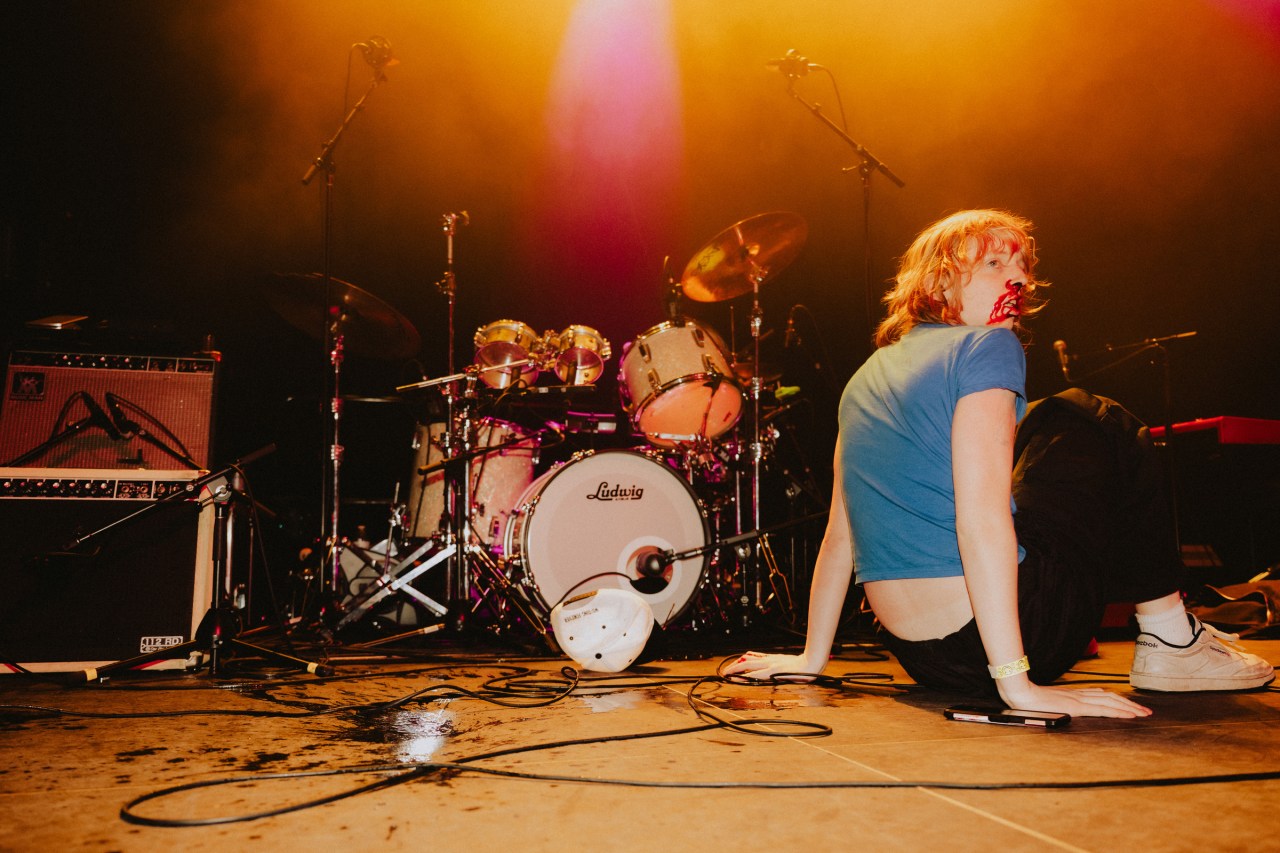
The internet is abuzz with a recent indie-rock debacle surrounding rock darlings Geese. Montreal turned Brooklyn outfit Airy Foist made a big splash in Denver– for all the wrong reasons. Or maybe the right ones? Their U.S. debut opening for Geese at Rolling Stone Magazine's Rock Tour series has fans questioning their provocative performance. Some even going so far as to ask: Is this real?
The answer is yes. It was real. Although the band is known in some circles for their confrontational attitude, this evening was a genuine crash out. But let's not get ahead of ourselves.
So, what actually went down? Was this an elaborate hoax? A conspiracy to destabilize Geese's hard-earned fandom? Or just an off night?
I want to let you all in on a little secret: I was there. I was invited by Airy Foist– or some industry representative– to attend the Denver show. Nothing was explained except an all expenses paid trip to Denver and a V.I.P. pass to the concert with the expectation that I write a basic review of the night. Run of the mill stuff. I said sure, why not. What's the worst that could happen?
In the day I spent with Airy Foist, there were only brief glimpses for what was to come. A hardened group of seasoned tour musicians who've paid their dues on the Canadian circuit, I took the little moments of stress with a grain of salt. And for a band with a low profile– whose claim to fame is their word-of-mouth, intense live performances– I had little exposure to their interpersonal dealings. At times, it felt like I was hanging out with a group of mysterious spies. Not because they were shady or clandestine, but because they had a kind of roll-with-the-punches attitude that seemed larger than life. But their happy-go-lucky dynamic made me feel distant from them, like it was a force field repelling me away from them, even though they seemed to share their minds freely.
Two hours before the concert, I was brought backstage to the Green Room where Jess, the lead singer, and Franco, their manager, seemed to be in a tense conversation. When I entered, they pivoted their attention towards me, and the tension seemingly disappeared. I spent the next hour hanging with them during their pre-show rituals. They seemed in high spirits, with their keyboardist even remarking about what a great opportunity this was for the band's career! They are major fans of Geese and felt honored to be invited to the big Denver show. "I love Cameron Winter's lyrics. They are so weird but true feeling!" But nothing could have prepared me– or any of us– for what happened right before they went on stage.
The crowd was jostling with anticipation. You could feel their energy bouncing off the concert hall walls. These kids wanted some damn rock n' roll! And Airy Foist was ready to rock.
Just as the band moved to take their places, Franco came bursting into the Green Room. He had a crazed aura. "Bad news," he said, "that thing we were talking about earlier, Jess? It's going to happen." The smile fell off Jess' face like Wile E. Coyote off a cliff. At once, the band erupted into chaos. There was a cacophony of "I told you so"'s, barks of accusation, and wholesale denial. I couldn't keep track of all the finger-pointing. The band seemed split like an atom. It was downright nuclear.
And then they went onstage. Without filling me in on what happened. Without addressing the apparently imminent crisis. Without a moment to gather themselves.
From there on, it is indie-rock history– the antics, the drama, the fight. From my perspective, the night went as smoothly as it could have considering the bombshell news that broke just moments before they went on stage.
But I'll never know what actually happened.
Once the band finished their ill-fated set, Franco abruptly told me the band was leaving Denver. I never saw Jess or that ragtag group of musicians again. It was like some kind of strange dream. I didn't even get to say goodbye.
When I flew back to N.Y.C., I was left with more questions than I had when I left. Who really is Airy Foist? What did Franco tell them? All I had was a note-book full of naive scribbling recounting the scene: Airy Foist was listening to "Sir Duke" by Stevie Wonder in the Green Room, laughing over memes on their phones. The drummer was skimming the pages of Gravity's Rainbow by Thomas Pynchon. Jess was noodling on the guitar, trying to figure out the horn part to "Sir Duke." Here are some of music's pioneers that time will not allow us to forget…. All seemed fine and dandy. They were living the indie rock dream. But Airy Foist– what happened?

July 4th, 2026
A sensitive ear will immediately pick up on Patch +'s treatment of noise through-out their latest release Series A. Noise, for many of us, is a common fixture of the world, even if it's not regarded as such. It is a backdrop, a foreground, a stigma, an insult, and a celebration. It is there when we least expect it and steals our attention to the reaches of a distance which complicates the notion of detached observation.
Intuitively, Patch + feels this, and they work in a lineage of electronic musicians who consider the use of noise as a vital element for composition. Instead of noise as uncontrollable or destabilizing stochasticism, noise is enveloped into ambience and texture. A move to make noise something both more humane and more strange in its proximity to a human drama. What is this aspect of sound, so necessary and corrupting, capable of carrying metaphysical sentiment or dogging the body with a brash confrontation with abjection?
Part of this ethos entails a feathering of the voice into the mix, compressing the voice into a hushed melodic disclosure against the push and pull of the rhythm. You want to move closer to the voice as it disengages from the commonplace directness of a performance, and all the while a programmed beat repeats until you lose your sense of the count to its pulse. Like those famous shoegazers of yesteryear– or even those famous first-wave mumble rappers of yesteryear– the voice is submerged, sunken, made quiet by position or by presentation. With any mix that embraces the possibilities of abstracting the voice– whether that is by signal processing, layering and juxtaposition, straight up decibel mixing, or at the source of performance (slurring and warping words for affect or meter, using a "bad" microphone, being more real than is unfortunately customary)– noise enters the picture, even if by absence or a recalibration to the audio's ineffable "quality." For the contemporary scene (if there even is a general condition), the accentuation of noise where the voice is is a way to elide the pressure of the non-stop onslaught of exposure and the corollary mandate to perform the self. It is with this practice that Patch + seems to flourish.
Take the album's eighth track for example– "Impossible." The vocals enter with a kind of braggadocio expected from such a hypnagogically swaggering beat ("Uh-huh"), but it is immediately contravened by a soulful, melodic vocative which approaches a kind of smooth-sailing shyness. The vocal's audio treatment only furthers such a turn away from the ostensible centeredness of a vocal performance– it is drenched, auto-tuned, and wet with the timbre of micro-pitch modulations. Resonant of 2000's and 2010's hip-hop and indie pop as well as the perennial insurgency of lo-fi, this track is exemplary– to me, at least– of the group's virtues.
But I should not over-state Patch +'s status as noise musicians. That would be a near complete misnomer. From D.O.T. Audio Art's promotional material, it appears that the group thinks of themselves as defining the genre of "Electro Class," which would be a synthesis of art punk and synth pop. Very good. (And, make of this what you will, a preliminary Google AI Overview states: Their music is known for odd ideas and weird vocals). All these descriptions are stylistically apropos. But appealing to a mere fusion of art punk and synth pop risks missing their embrace of contemporary electronic tropes, i.e., the stuff going on right now: slinky-sad emo-inflected vocals as abstracted synth-lines shirking semantic transparency for the primacy of musical expression (Soundcloud's strange enduring influence); the die-hard quest for the pop hook while remaining true to cool (see sleek electro-post-punk Track 3, "Its Too Far"); brazen, left-field genre-hybridity (which means less and less and less with each passing second, but is at least useful for writing "criticism," which itself means less and less and less with each passing second…); the revival of irredeemably garish Myspace-era electro-trash aesthetics without any irony (the last true, dare i say, folk music?); the incorporation of glitch by way of Focusrite fidelity and mobile recording rigs (the widespread penicillinification of democratized, "anyone-can-cook" home recording); and the (Xth) return of Gothicism as a mode for expressing the weird loneliness of the digital life's cognitively dissonant modus operandi (i have 10,000 friends!).
Their fourth track– the ambient, depression-tinged "Clocking In"– features intricately intertwined vocals about monotony and dead-end relationships (which ones?) over dusky, wind-swept chords that sway on the stereo edges. The rhythm section recalls the hypnotic-somber downtempo work of Australian cult heroes HTRK. It's followed up by "Molly," a straightforward indie jam that harkens back to Montreal's late-aughts-to-mid-2010's explosion of oddball pop experimentation. After that, "Lose Control" sounds like a chilled out version of The Dallas Cowboys' manic post-Pandemic reclamation of having dumb concerts for young people who lost a few years of freedom to attend awkward house shows and have awkward partying situations that make them question basic aspects of their social identities. This track finds Patch + working in an idiom that, along with the reference to the The Dallas Cowboys and, really, a whole entourage of baiters, haters, and creators, necessarily must account for the somewhat abominable contrivance of "indie sleaze" as an even intelligible "aesthetic," "era," "vibe," or even "category," which could speak to a real constituency of music listeners and not a vertically-integrated system of manufactured consumer taste. This is not a moment of accusation against Patch + (and who doesn't appreciate some waste product of the indie sleaze industry?), but a reflection on the ways in which such a track will be heard as engaging, subverting or embracing, or even trying to compete in a wider cultural milieu. Why participate in such a party? A faithless cash grab, a nostalgia for a neverland, or for the fun of mimicry? For Patch +, my gut tells me it is likely the latter. But who knows? Do they even know?
Let me summarize my ideas for something like a conclusion: Patch +'s newest release is impressive in its at times minimalistic elegance, presenting nine coarsely-sultry art-pop tracks that find the group using the stylistic peculiarities of their genre-palette to their advantage. It participates in a kind of non-yearning nostalgia which takes aspects of new wave, punk, indie, you name it, and refashions whatever that may be (a Suicide drum machine or new-wave romanticism) into an intuitive expression for the present mix-up. A lot of the conspicuously in-touch production is found in the group's care of their vocal treatment– both in signal processing and melodic arrangement– which makes a listening experience that oscillates between a whisper-to-ear intimacy and a dreaminess in the noise-laden mix that erupts into an elliptical hook. This album covers a variety of terrain in a way that never feels forced or non-sequiter, disclosing some deceptively nuanced expressions of contemporary alienation through pop music alacrity. Series A is a welcome addition to the ever shifting scene of what is glibly referred to as "alternative." And it is mostly an alluring alternative.
July 4th, 2026
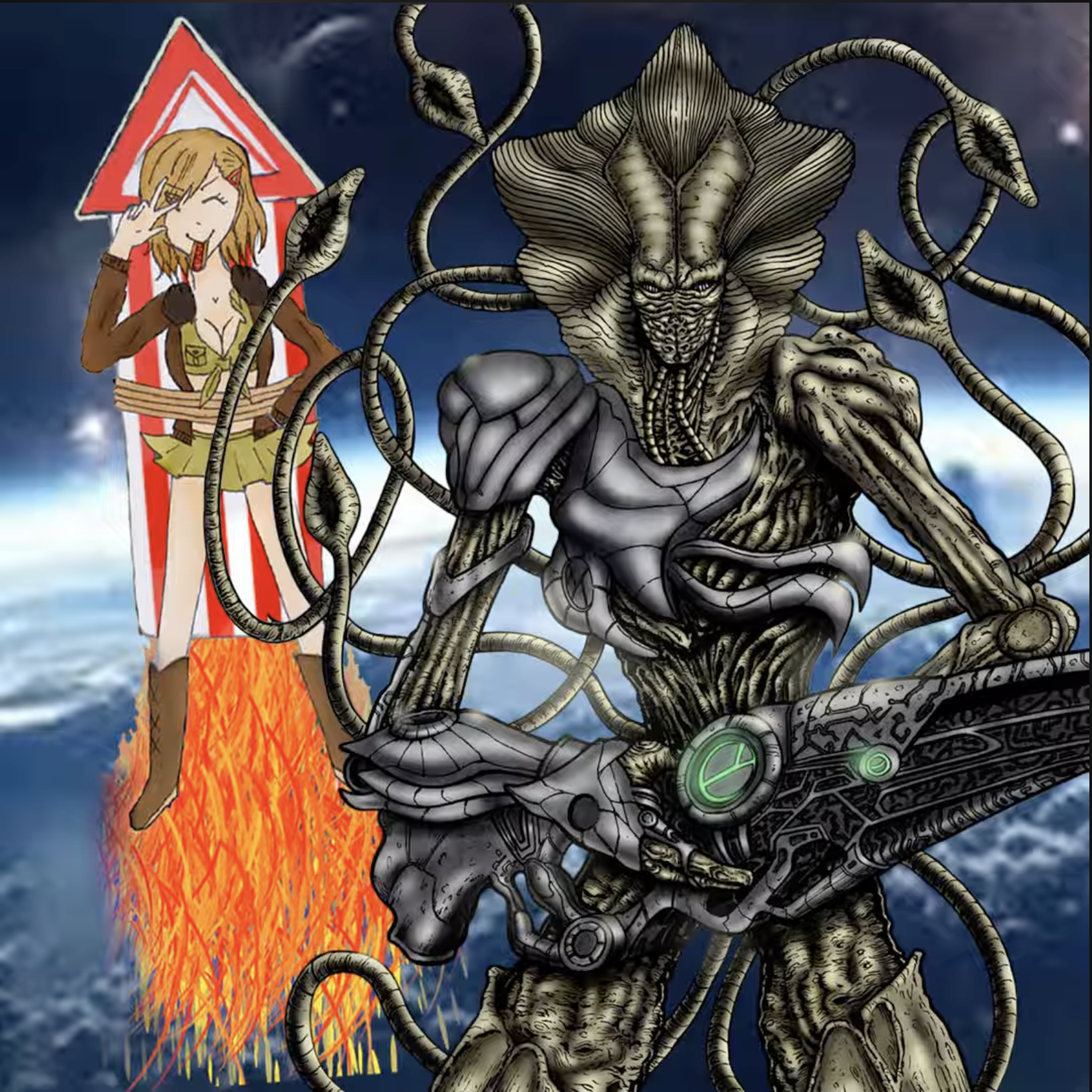
ASHEVILLE. What the fuck is Marjorie W.C. Sinclair on???- we ask with superlative laudation. A side project of Bay-born Orion Sage Ohana, a.k.a. Evanora Unlimited, continues a monumentous streak of deep-fried G-funk, post-vaporwave hex rap. Although Sinclair's affiliation with any specific internet rap scene has become diffuse since the disbandment of Reptilian Club Boyz, the project stays committed to pushing the free-wheeling, quickmix ethos that characterizes the many dispersed collectives which surf the wasteland platforms known as "streaming services." Sinclair teams up with Asheville artist DupontPavilion (a.k.a. the more dubious moniker MONKEYCHILD, but no disrespect...) to feature on a single-- "Independence Day"-- from his new album "ASHEVILLE ADOO."
Clocking in at just under two minutes, the pair each take a rough minute to signal their virtues as vices and vice versa. Kicking off with a meme-ified Ennio Morricone sample before plunging into a cooked 80's funk beat that you would hear off a tinny radio at a Salvation Army, DupontPavilion is the first player to step up to bat, totally under the influence of Instagram reels and a microdose of braggodocio. The rapper flexes his humor in a spry verse that touts the genre's traditional if not played out theme of authenticity. "I ain't never telling lies/you can play me anywhere cause I'm real n recognized." Glad to know this guy values honesty!
But honestly, real recognize real-- it's hard to dispute such a reality. This becomes the trans-geographic sign of respect as Sinclair grips the mic, nodding to his Bay Roots as well as Asheville's Blue Ridge aura. Sinclair proceeds to cut it up with anime and action movie references-- hence the title. Both rap personas yield surprising vibes well beyond the face beneath the facade. The chat was excited by this collab, which will be in my rotation for a minute.
Stand out bar: "Cold War Romance french kiss under missiles/like its old folk-lore written Christmas tradition."
March 24th, 2026
This album was counterclockwise